
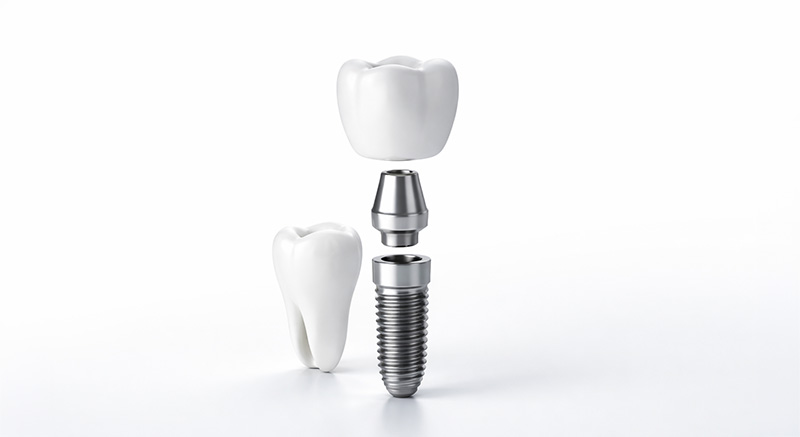
A dental implant is an artificial tooth root designed to replace a missing natural tooth root. It is most commonly made from titanium, a highly biocompatible material known for its low risk of allergic reaction. Depending on the patient’s preferences and any known sensitivities, zirconia implants may also be considered as an alternative. The implant is placed into the jawbone, and a prosthetic tooth—usually made of porcelain or zirconia—is attached on top to restore both function and appearance.
Structure of a Dental Implant
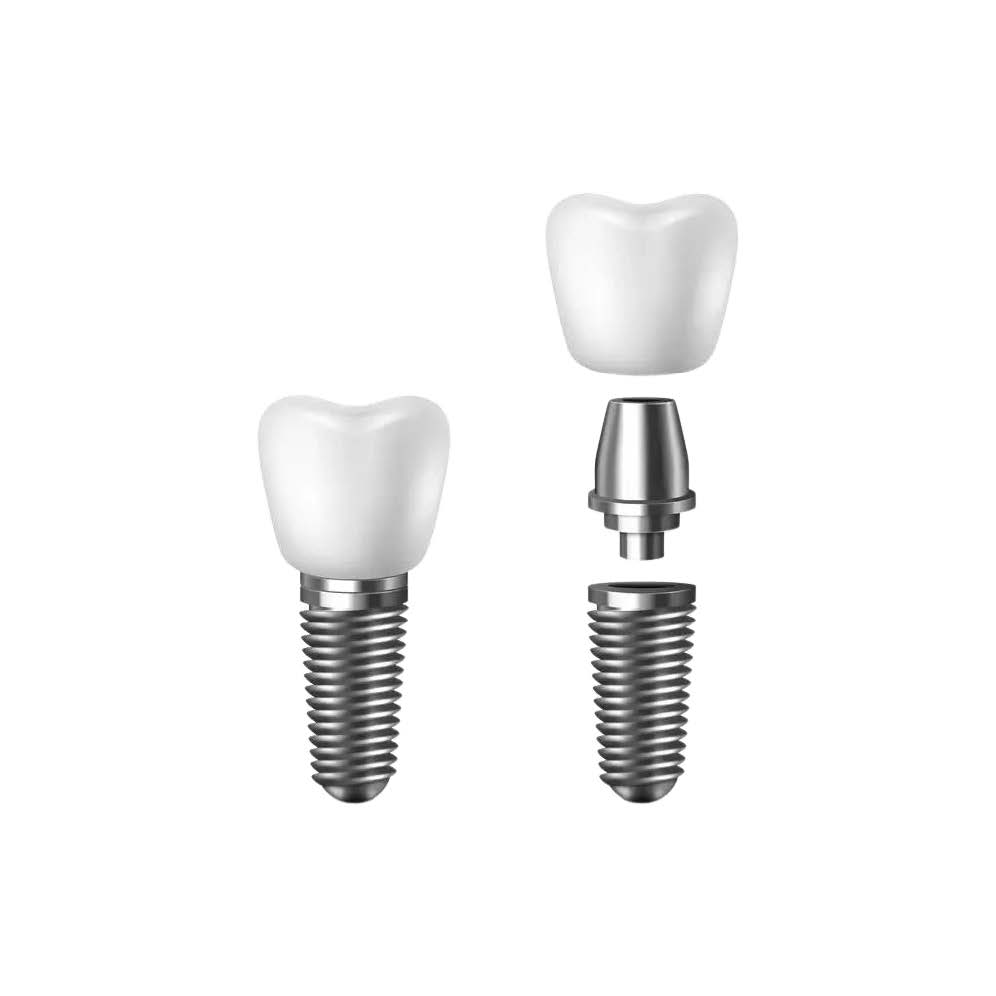
A dental implant system typically consists of three main parts:
Implant (Fixture / Artificial Root)
This is the screw-like component inserted into the jawbone. Usually made of titanium, it acts as an artificial root and provides a stable foundation for the replacement tooth.
Abutment
The abutment is the connector piece that links the implant to the final crown. It ensures a secure fit between the implant and the visible tooth restoration.
Crown / Prosthetic Tooth
This is the visible part of the tooth that sits above the gum line. It is the part used for chewing and smiling, and it is typically made from porcelain or zirconia for a natural-looking result.
How Does a Dental Implant Work?
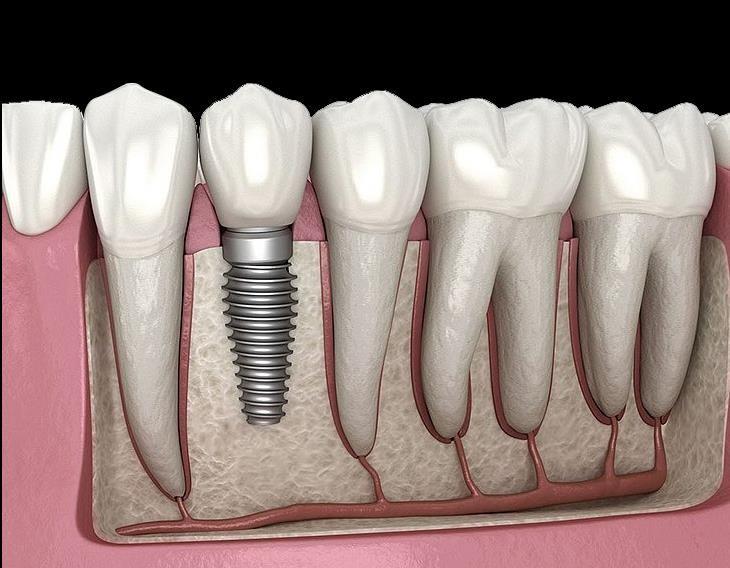
– The implant is placed into the jawbone through a minor surgical procedure.
– Over time, it fuses with the surrounding bone in a process known as osseointegration.
– Once this integration is complete, the abutment and the prosthetic tooth are attached.
– As a result, dental implants can be used to replace a single missing tooth, serve as an alternative to a dental bridge, or support a fixed prosthesis in cases of complete tooth loss.
Advantages of Dental Implants
– They replace missing teeth without requiring adjacent healthy teeth to be reduced or damaged.
– They provide chewing strength and stability that closely resemble natural teeth.
– With proper care, they can last for many years and, in some cases, a lifetime.
– Because the implant transmits functional force to the bone, it helps stimulate the jawbone and may slow down bone loss over time.
Important Things to Consider
– Dental implants may not be suitable for every patient or every bone structure. A detailed clinical examination and 3D volumetric imaging are necessary for proper planning.
– Factors such as smoking and uncontrolled diabetes can reduce the success rate of implant treatment.
– As with any surgical procedure, temporary side effects such as swelling, tenderness, or mild discomfort may occur.
– Regular oral care is essential. Brushing, flossing, interdental brushes, and professional dental cleanings all play a key role in maintaining long-term implant health.
Who Is a Good Candidate for Dental Implant Treatment?
In short, dental implants can be placed in almost any adult who is in good general health and has sufficient jawbone volume. However, in some cases, treatment may need to be postponed or may not be recommended at all.
When Should Implant Treatment Be Delayed or Considered With Caution?
– Uncontrolled diabetes, serious heart disease, or immune system disorders
In these cases, communication with the patient’s physician, medical clearance, and careful treatment planning are essential before proceeding with implant surgery.
– Heavy smoking
Smoking can negatively affect both implant success rates and gum health. Patients are usually advised to quit or at least reduce smoking before and during treatment.
– Patients undergoing chemotherapy or radiotherapy
Implant treatment must be evaluated very carefully in patients receiving cancer therapy. This is especially important if radiotherapy has involved the jaw area.
– Pregnancy
Unless there is an urgent need, dental implant surgery is generally postponed until after delivery.
– Teenagers whose growth and development are not yet complete
Because jaw development may still be ongoing, implants are usually not recommended until a certain age. As a general guideline, this is around ages 17–18 for females and 18–20 for males, although the final decision should always be based on clinical examination and radiographic evaluation.
Who Is Not a Suitable Candidate for Dental Implants?
– Patients with serious systemic health conditions that make surgery unsafe and for whom medical clearance cannot be obtained
– Patients who are unlikely to maintain adequate oral hygiene or who have very limited access to regular follow-up visits
– Patients with an active infection in the implant area that cannot yet be controlled; the infection must be treated first, and only then can implant treatment be reconsidered
For a Single Missing Tooth, Is an Implant or a Bridge the Better Option?
For an adult with good overall health, suitable bone structure, and good oral hygiene, dental implant treatment is often a very logical and effective solution.
Advantages of a Dental Implant
– Adjacent teeth do not need to be reduced
Implant treatment allows the missing tooth to be replaced without cutting down healthy neighboring teeth, making it a more conservative biological approach.
– It may help stimulate and preserve the bone
Because chewing forces are transmitted directly to the jawbone, implants may help reduce bone loss in the area of the missing tooth.
– It functions as an independent long-term restoration
Even if a neighboring tooth develops a problem later on, the implant-supported tooth usually does not need to be remade.
– Oral hygiene is easier
An implant can generally be brushed and cleaned much like a natural tooth. Unlike a bridge, there is no “tunnel” underneath that makes cleaning more difficult.
– It can offer excellent results in the aesthetic zone
Especially in the front teeth region, implants can provide results that are closer to the look and feel of a natural tooth when planned correctly.
Disadvantages of a Dental Implant
– A surgical procedure is required
– The healing period and final restoration process may take longer than a bridge
– If bone volume is insufficient, additional grafting procedures may be necessary
– The overall cost is usually higher than a conventional bridge
Advantages of a Dental Bridge
– Faster results
In suitable cases, bridge treatment can often be completed in just a few appointments, with a shorter overall treatment timeline.
– No surgical procedure is required
For patients who do not want surgery, or for those with medical conditions that make surgery more risky, a bridge may be considered a practical alternative.
– No additional bone surgery is needed
For patients with insufficient bone volume who do not want or are not suitable for bone grafting, a bridge can offer a more straightforward solution.
Disadvantages of a Dental Bridge
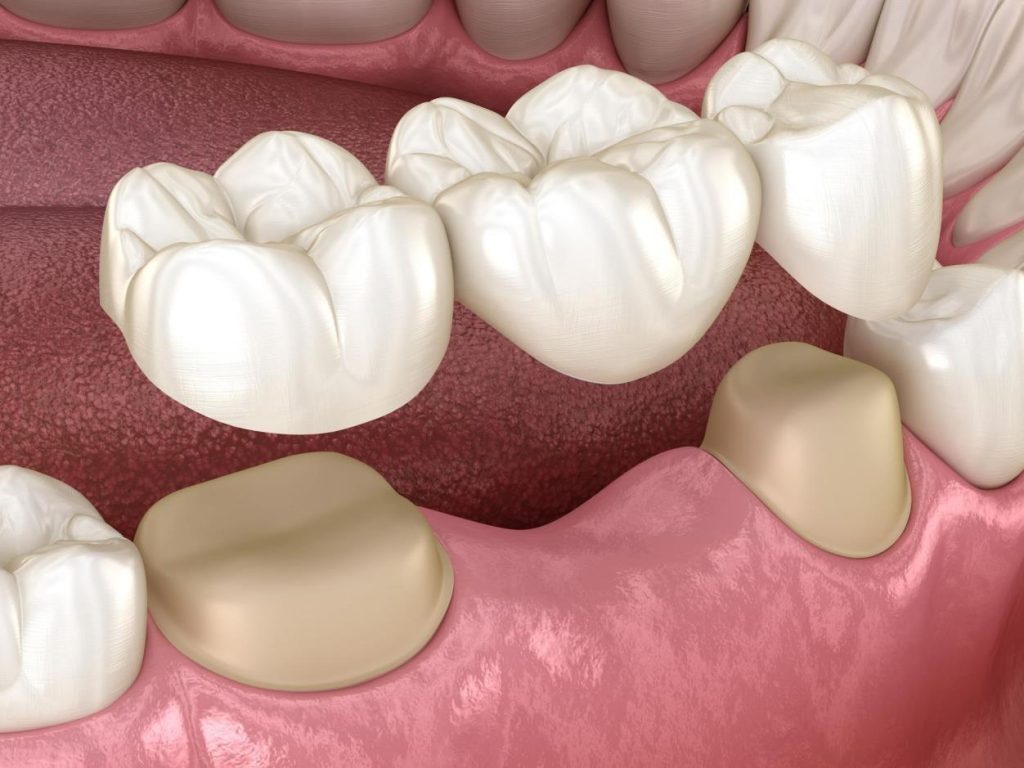
– Healthy adjacent teeth usually need to be reduced
– Because the chewing load is shared by multiple teeth, the supporting teeth may develop problems over time
– Cleaning under a bridge is more difficult, which can increase the risk of decay and gum disease if oral hygiene is not maintained properly
– If one of the supporting teeth fails, the entire bridge often needs to be replaced
Conclusion
In conclusion, dental implants are one of the closest alternatives to natural teeth when replacing missing teeth. When properly planned, implant treatment can support both an aesthetic smile and comfortable chewing function.
At Papirus Dental in Fethiye, our experienced dentist, Dr. Özge Uysal, can provide a comprehensive assessment using 3D imaging technology to determine the most suitable treatment approach for your needs.
If you are considering dental implants for missing teeth and would like to learn more about aftercare, implant longevity, and dental implant costs, you are welcome to contact our clinic for detailed information.