
A Permanent Solution for a Complete and Aesthetic Smile
What Are Zygomatic Implants?
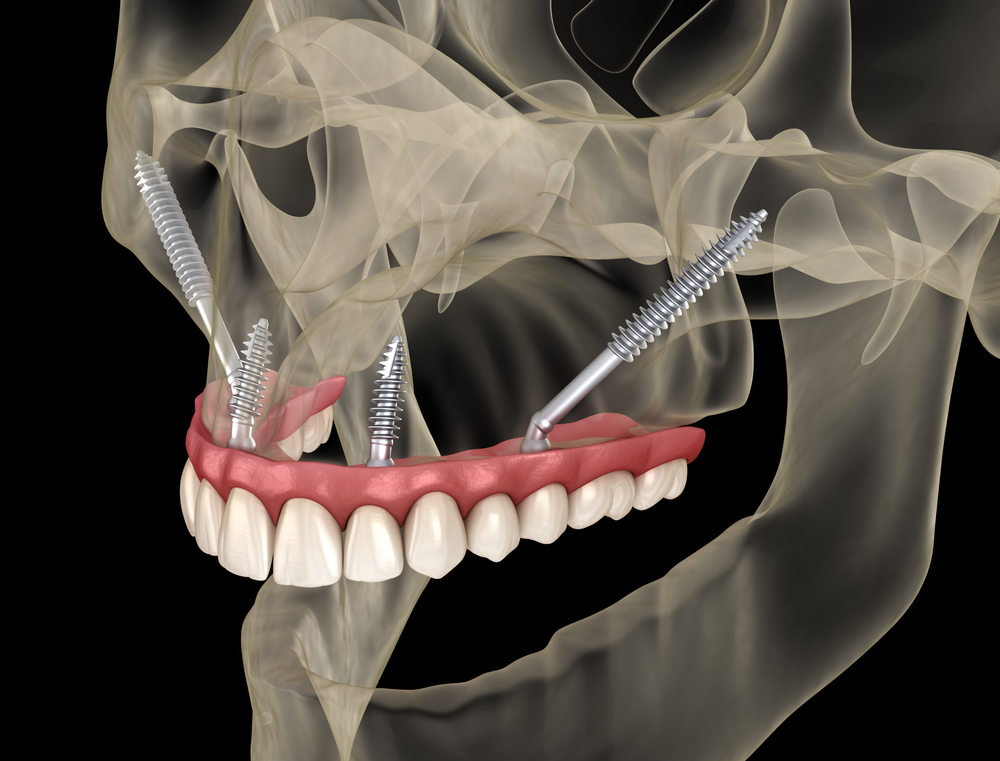
Zygomatic implants are long dental implants designed for patients with severe bone loss in the upper jaw. They allow for fixed implant-supported prosthetic treatment without the need for bone grafting procedures. Unlike conventional implants that are placed into the maxillary bone, zygomatic implants are anchored into the zygomatic bone (cheekbone).
- Implant Length: Typically between 30–55 mm (much longer than standard implants).
- Ideal Use: Advanced maxillary atrophy, bone thickness below 4 mm, and cases where conventional dentures or traditional implants are not sufficient.
Treatment Stages
1. Examination and Planning- Panoramic X-ray + CBCT (tomography) are used to evaluate the zygomatic bone.
- The patient’s systemic health, oral hygiene, and expectations are considered.
2. Surgical Procedure
- The treatment can be performed under general anesthesia or sedation.
- One or two zygomatic implants are placed into the zygomatic bone instead of the upper jawbone.
- When necessary, additional standard implants may be placed in the anterior region (a combination similar to All-on-4 is possible).
3. Temporary Prosthesis
- A fixed temporary prosthesis can be delivered on the same day or within a few days (immediate loading).
- Soft tissue healing is monitored (usually 2–4 weeks).
4. Final Prosthesis
The permanent fixed prosthesis is delivered approximately 3–6 months later, after complete integration of the implant and bone.
Benefits
- No Bone Graft Needed: Eliminates the need for long and painful bone grafting procedures.
- Time-Saving: Faster treatment without waiting months for graft healing.
- Solution for Severe Bone Loss: Offers fixed teeth for patients who previously could only use removable dentures.
- Long-Lasting Results: With proper planning and maintenance, success rates over 10+ years are very high.
- Immediate Loading: Patients maintain esthetics and function without interruption.
Post-Treatment Care
- A soft or liquid diet is recommended for the first 1–2 weeks.
- Oral hygiene is critical; special floss and interdental brushes should be used.
- Routine check-ups are essential, especially during the first year.
- Avoiding smoking and harmful oral habits increases treatment success.
Who Is a Suitable Candidate?
- Patients with advanced bone loss in the upper jaw
- Those who cannot tolerate removable dentures and desire fixed teeth
- Patients who are not suitable for or do not prefer bone graft procedures
- Individuals in good systemic health (diabetes must be under control)